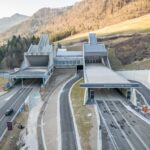
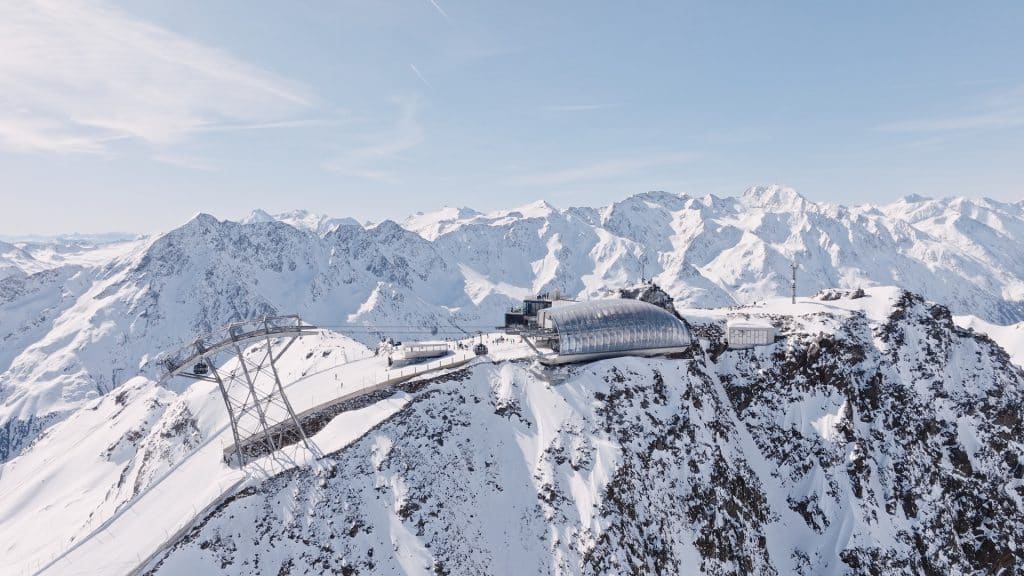
Located at an altitude of 1,350 to 3,340 meters, the Sölden ski resort in Tyrol offers skiing fun, mountain dining, and numerous highlights, including the cinematic installation “007 ELEMENTS” at 3,040 meters and the BIG 3 Rally. The 144 kilometers of slopes, covering a total area of 450 hectares, are served by 31 lifts and, with two glaciers and intelligent, resource-efficient snowmaking, guarantee reliable snow from October through May.
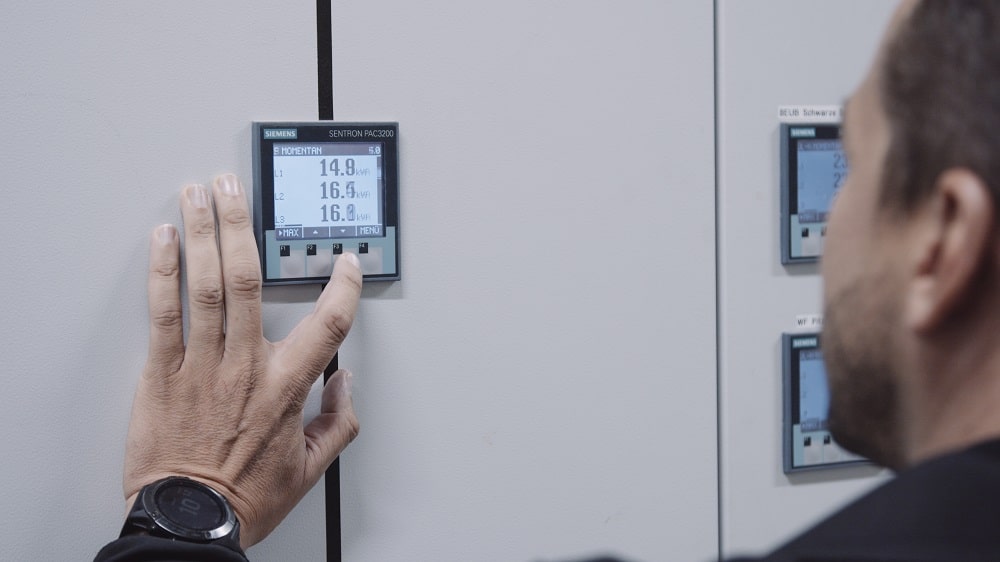
To ensure this promise can be kept year after year — even in the face of climate change, potentially milder pre-winter months, and rising energy costs — Bergbahnen Sölden began digitizing the ski resort early on. Siemens was selected as a partner: In previous, publicly tendered projects, the company had fully met the customer’s expectations regarding standardization, reliability, and scalability of industrial, process, and automation solutions with its SIMATIC S7 controllers. “With our first digitalization project over 15 years ago, we implemented a measure to limit peak loads,” recalls Michael Maier, Deputy Technical Director of Bergbahnen Sölden, “To this end, 320 measuring points were installed throughout the area, and subsequently, 100 kilometers of fiber-optic cable have been laid in the ski resort to date, to which additional information and communication technology systems are now also connected.” The multifunctional devices based on SENTRON PAC made it possible, among other things, to precisely identify extreme base loads in the summer and to locate and neutralize dormant consumers.
For more than 15 years, the Sölden ski resort has relied on Siemens as its partner in digital transformation.
Wide range of applications
While compliance with the maximum total energy limit set by the utility company can undoubtedly be described as the primary motivation at the time — exceeding the so-called quarter-hourly peak is very costly — the scope of application has since evolved dramatically. “Downtime in snowmaking can quickly reach a level that jeopardizes the season for our customers,” explains Lukas Tauferer, a process automation specialist at Siemens, “which is why it is absolutely essential that neither the transformers nor the snowmaker outputs are overloaded. At the same time, demand-based snowmaking offers potential for energy and cost savings.”
Assessing the actual snow conditions on the slopes before the start of the season — and thus determining the amount of artificial snow needed for a successful opening, as well as the conditions required for its production (namely, snowmaking water and cold ambient air, ideally well below freezing) — is the responsibility of the snowmaking experts. “However, it is very difficult to estimate in the terrain whether there is one, five, or 10 meters of snow, as the snowpack adapts to its surroundings. Consequently, the experienced snow masters built in a buffer from the outset for the initial and seasonal snowmaking to ensure that the winter experience isn’t spoiled,” explains Harald Ruetz, Tauferer’s colleague, and thus leads into the next innovation from Bergbahnen Sölden — the digitization of snow management, enabling operations based on precise data.
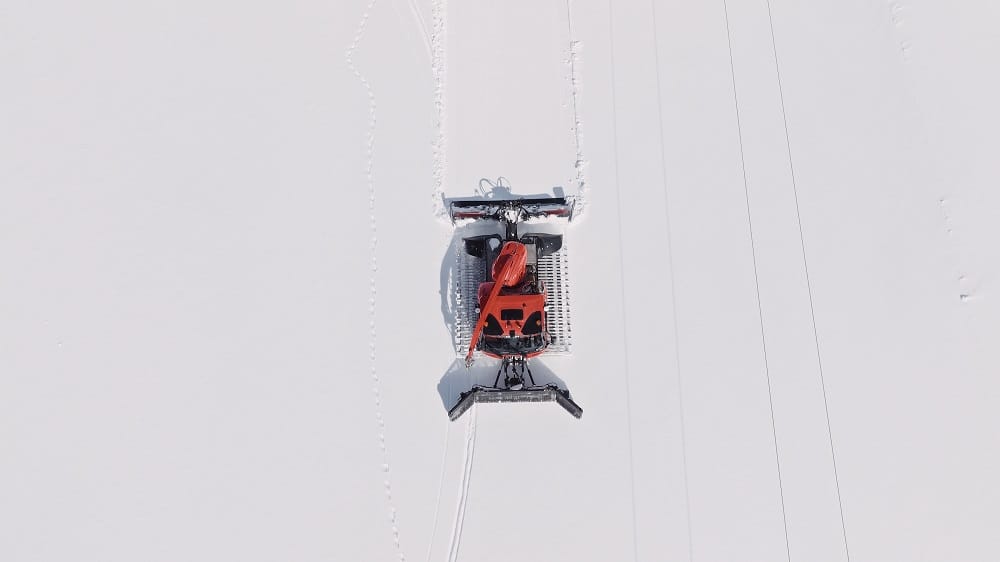
Between 2014 and 2016, Bergbahnen Sölden implemented the SnowSAT project in collaboration with Kässbohrer. Since then, after the initial snowmaking, the snow groomers have been determining the actual snow depth on the slopes in real time using GPS and LIDAR measurements, with the SnowSAT system’s visualization assigning a specific area to each snow gun and a specific color depending on the amount of snow present. “Nowadays, only the settings for the initial snowmaking are based on the snowmaster’s knowledge and experience,” explains Manuel Köll from the IT team at Bergbahnen Sölden. The settings described above are subsequently transferred from SnowSAT to the snow management system, which is also provided by Siemens and based on WinCC. Here, the volume of snowmaking water per outlet required for the assigned section of the slope is specified. Once the snow-covered area is subsequently accessible to snow groomers, the live data from on-site measurements is transmitted in real time to the central control system and compared with the corresponding target values. “The solution uses this difference to determine the actual volumes of snowmaking water still required. In this way, the system ensures demand-driven, resource-efficient, and more cost-effective slope preparation,” summarizes Harald Ruetz.
The snow groomers can measure the actual snow depth on the slopes in real time.
Combination with energy management
By integrating the snow gun control system with the energy management system, staff also receive precise and visually clear load management information for the ski resort. This includes, among other things, the number of additional snow guns that can be assigned to a specific cable car station, broken down by the respective runs. At the same time, due to the size of the snowmaking system and the number of snow guns, visual identification of their assignment to the respective outlets is only possible to a limited extent. In the visualization, color bands handle the assignment, allowing users to see at a glance which of the eleven pump stations each individual snowmaker is connected to. In terms of load management, the diagrams extend all the way to the transformer, as the maximum power may only be reached there under certain conditions. Manuel Köll: “In addition to the visualization, which is based on the standard setup of ‘one snow generator per outlet,’ our solution always shows us the actual consumption in the field — even when snow generators without a data connection are in operation. An alarm is triggered immediately if the system approaches its power limit.”
Snow management based on precise data
In addition to the 15-minute peaks mentioned earlier and the potential for savings resulting from the precise operation of snow guns based on measured snowfall, there is another key reason for successful energy and load management of the entire snowmaking system. “Due to climatic conditions, the window of opportunity for successful base snowmaking under ideal environmental conditions is now no longer than a week before Christmas and is often even shorter,” explains Maier.
He adds: “If the system were to become overloaded and the snow machines were to fail, it would take hours — at best — to get them up and running again. And those hours could actually cost us the start of the season, especially if no other window of opportunity arises.”
“Due to climate conditions, the window of opportunity for successful base snowmaking under ideal environmental conditions is now no longer than a week before Christmas — and is often even shorter.“
Michael Maier, Assistant Technical Director of Bergbahnen Sölden
At Bergbahnen Sölden, we have always been and remain fully aware of this challenge. The approach taken — a combination of technology and digitalization — enables maximum risk minimization alongside maximum energy efficiency and resource conservation, which also includes eliminating unnecessary snow transport by snow groomers. In addition, the various systems provide Bergbahnen Sölden with important data that not only supports further development but also ensures transparency in public discourse: “As is well known, the power consumption of a snowmaker is often compared to that of a single-family home. However, we can also demonstrate that, on average, we operate for only 4.5 days per machine per season,” says Michael Maier. And the resulting “white splendor” from October to May benefits not only the employees and the company, but also the entire region and vacationers.
 © Bergbahnen Sölden

© Bergbahnen Sölden